
Another widow described Valentine’s as a day full of “love bombing”. I appreciated that wording. A day that kinda slaps you across the face. All the reminders from the world that a huge love is now unrequited. Reminders of what I had. Now there’s an untethered love that moves with me always.
Tom and I never celebrated Valentine’s day, he was on the road lots so me spending a quiet night with Frank is about par for the course. I would have talked to him though, would have had a funny little emoji text waiting in the morning when I woke up. Last year I made heart-shaped cookies. It’s a commercialized holiday we didn’t care about. I didn’t expect to care about it this year.
But, it was a day where I needed to put away my phone a bit and take a break from social media. A day where “grief is just love with no place to go” sure resonated (I’ve shared this one before – it’s a favourite quote). Of course there’s other love, other support. But there’s also that spot in my heart that is forever reserved.
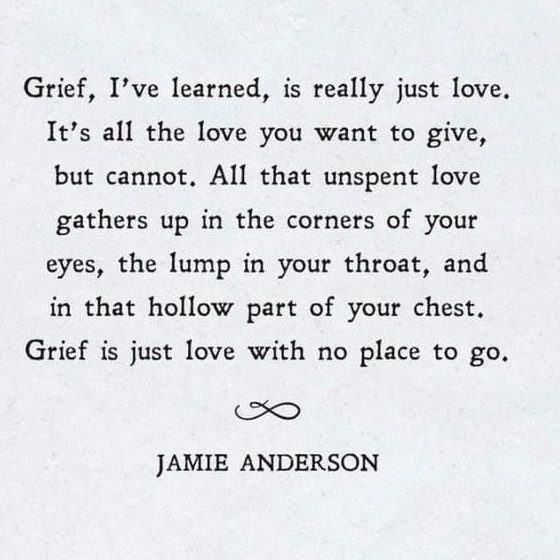

I know, I know our love is a gift that can never be taken away. Love survives death. It’s better to have loved and lost, than never loved at all. Grief is the price we pay for love. Great sentiments, sure. But it’s also ok to be really sad about losing your person and all the love wrapped up in that. It is still brutally painful and platitudes can’t touch that.
I found the book The Grieving Brain by Dr. Mary Frances O’Connor so helpful. She talks about how our brains must learn that our loved one no longer lives in the “here, now, and close” that we expect. Our loved ones are literally part of us, in our epigenetics and memories, but how we express or feel love is forever changed.
Dr. O’Connor shares how we are always creating these virtual brain maps of where our loved ones are. Even when apart, we are connected and we know where our people are. When you can’t “locate” a loved one, the brain is like WTF and sends off all kinds of alarms. One thing triggered by those alarms is self-blame. Like if I had been trying to get ahold of Tom while he was alive but he was ignoring my phone calls and texts or refusing to talk to me, I might start to question things. Might think he was upset about something. Might wonder what I did wrong and try to fix it. Try to right things in the relationship so all can go back to a calm brain map.
That was a huge “a-ha” grief moment for me, and I’m sure applies to a lot of different losses and grief experiences too. Of course us humans with our negative thoughts – that’s where we go first. We can be overcome by questioning and thinking about any bad thing that ever happened. Even when they’re silly little things that actually did not mean anything in the grand scheme. For me, some of this included what I can now say were the stupidest things – like oh I didn’t say thank you enough for Tom making morning coffee when he was home, or how I should have never told Tom to make the bed as my brain focused on a little spat about cleaning the house.
Our brains don’t do a great job of prioritizing the wonderful memories. If you’ve done any learning about the brain, you know we humans always tend to focus on negative thoughts over positive ones. In the old times where we had to say remember oh if I eat this berry it’ll kill me, then ok it was good to prioritize the negative as warnings versus thinking of the warm feelings you’d get eating those berries as part of a meal with loved ones. Unfortunately we still haven’t evolved to focus on all the things that are great about ourselves and our relationships.
I now think it might be a mandatory part of grief work to sure acknowledge negative feelings or memories that come up, but then put in the work to bring up the warm fuzzy ones too. Look at photos, tell stories, laugh about good times, spend time reliving those memories – help the brain to focus in on the amazing times. To feel the love.
Another grieving brain take-way was learning how difficult it is for the brain to predict absence versus presence. It takes a long time and is an exhausting process to learn that someone isn’t coming back. That goes against our nature. There’s examples from the animal kingdom shared of how creatures have to believe their mate is going to return. Like emperor penguins where one of them stays on land with an egg while the other partner goes off to sea for months at a time to hunt. They have to believe that their little buddy is going to come back, or else they would abandon their egg and the species wouldn’t make it.
It made a lot of sense to learn that we are better at predicting someone’s return. Even if our virtual brain maps can’t make sense of where someone is, it just doesn’t compute that they’re gone. We will fix this. We will find them. No wonder I still find myself expecting Tom to come back home. It’ll take a long time for my brain to understand and predict that he is gone, and I actually wonder if that will ever fully happen. Like all those little sayings remind us – love doesn’t disappear when someone dies.

whale bones make for a great heart picture prop!
(PS Thank you to my people who continue to show me love and support everyday, who come through with thoughtful little things or messages when I didn’t even know I needed them)

 A Smiling Young Widow
Leave a reply to Anonymous Cancel reply